Why satire matters more than ever
There was a time when satire exaggerated reality. Today, reality seems determined to do the exaggerating for us.
Modern British politics has become a theatre of contradictions - grand speeches followed by quiet reversals; outrage cycles that burn brightly and vanish within days; personalities that feel less like public servants and more like characters rejected from an over-written comedy script. I hesitate to compare internationally, but only for a millisecond. Clearly, we are not alone.
In such a febrile environment, political satire in the UK is no longer “just” entertainment. It is commentary; an attempt to impose shape on wild disorder through the discipline of narrative and humour.
At times, it is also survival. Satire helps us process absurdity without becoming numb to it.
What Political Satire Really Does
At its best, British political satire does not merely mock individuals. It exposes systems. It highlights hypocrisy. It reveals the human frailties concealed behind confident statements and life-altering policies.
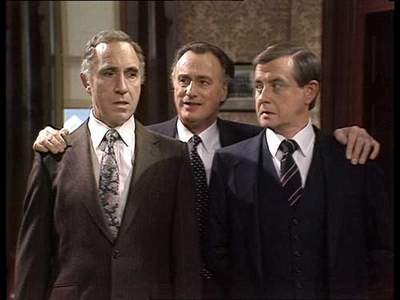
Classic works such as Yes Minister did not rely on slapstick. They dissected bureaucracy. They demonstrated how language obscures meaning and how power operates politely, almost invisibly.
Similarly, Spitting Image exaggerated public figures into grotesque caricatures - not simply to insult, but to illuminate traits already visible.
Even earlier, Animal Farm compressed complex political ideology into a narrative so clear that it remains relevant decades later.
Political satire succeeds because it simplifies without oversimplifying. It sharpens reality rather than distorting it beyond recognition.
Why Modern Britain Needs Satire
In the age of social media outrage and rolling news cycles, information - and misinformation - travels faster than reflection. We react before we analyse. We share before we verify.
Satire interrupts that reflex. It slows the moment down. When politics feels chaotic, satire introduces structure. When politics feels manipulative, satire provides clarity.
Modern political satire in Britain serves at least three vital purposes:
- It challenges authority - by asking uncomfortable questions through humour.
- It reveals absurdity - by pushing contradictions to their logical conclusions.
- It protects critical thinking - by inviting readers to laugh and then to reflect.
Hardly a day passes without a statement or event, amplified by media coverage, driving some to fury and others to fatigue.
Satire occupies the middle ground. It engages without shouting. It observes without sermonising. It offers perspective when perspective is in short supply.
Mockery Is Not Satire
Not all political humour qualifies as satire. Mockery – as proven by the UK TV show Mock the Week - is reactive. Satire is constructed.
Mockery responds to events. Satire builds a framework. It creates characters who embody systems - or attempt to navigate them. It explores how ambition, ego, loyalty and fear operate beneath official statements. It does not merely ask, “Isn’t this ridiculous?” It asks, “Why does this keep happening?”
This is why satirical fiction often outlasts headlines. A well-crafted political satire novel can remain relevant long after specific policies have faded from memory.
When Reality Feels Like Fiction
“You couldn’t make it up,” people often say. But writers must.
The challenge today is not inventing absurdity; there is an abundance of raw material. The challenge lies in selection and coherence. Satire does not amplify chaos for its own sake. It shapes political disorder into a narrative form, allowing readers to step back, see patterns, and consider alternatives.
Modern Britain does not lack material. What it requires are lenses through which that material becomes intelligible.
Why I Write Political Satire
I realised early on that humour disarms. It lowers defences. Within fiction, it allows ideas to slip past the instinct to argue.
In my own work, I am less interested in attacking individuals than in examining the structures that allow absurdity to flourish - the machinery, the incentives, the unintended consequences.
Politics is a serious business. But seriousness does not require solemnity. Some of the sharpest insights arrive disguised as jokes.
The Future of British Political Satire
As politics evolves, so will satire. Platforms may change - from television to novels to digital media - but the purpose remains constant: to illuminate.
British political satire has long favoured scepticism wrapped in civility; wit sharpened by restraint; humour that makes you smile before you realise it has made you think.
In an era of information and misinformation overload and competitive outrage, that tradition may matter more than ever.
To join the Path Finders mailing list, receive three prologues to Paths Not Yet Taken and get access to a quarterly newsletter, please complete the extremely short form at the foot of the home page.