Political satire vs political mockery
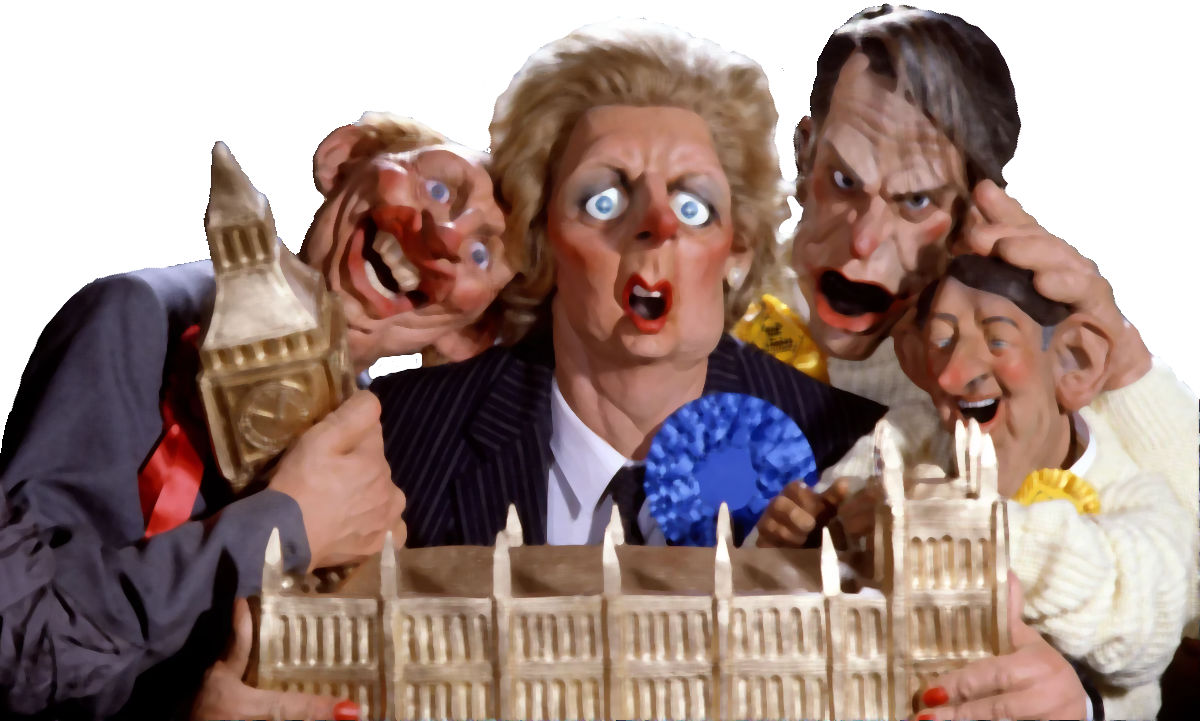
Why real satire targets systems, not individuals
A couple of people who have read the whole Path Finder series feel that I could have gone further with the vitriol. “Some satire eviscerates. Yours merely stings,” observed one reader, before going on to explain how attacking individuals would have enhanced the novels’ raison d'être.
It’s a fair observation and - while it wouldn’t persuade me to rewrite tranches of each novel – it did prompt me to write this blog to explain my thinking.
When a politician says something ill-judged, social media reacts within seconds. Clips are shared. Memes are created. Sarcasm floods timelines. By nightfall, the joke has burned brightly - and by morning it has largely vanished.
But is that satire? Not necessarily.
Much of what passes for political humour today is reactive. It mocks individuals. It ridicules appearance, mannerisms, and slips of the tongue. It provides a brief release of frustration. There is nothing inherently wrong with that. Mockery has its place. It can be sharp, cathartic, very funny and even necessary.
Satire, however, is something else.
Individuals: The Easy Target
Individuals are simple. They have faces, voices, quirks. They can be exaggerated and reduced to a defining trait - the ambitious minister for example, or the evasive spokesperson, or the perpetually outraged backbencher.
Personality-driven humour thrives because it is immediate. It requires little explanation. It fits neatly into headlines and short clips. But it also has a short shelf life. When the individual fades from office, so does much of the humour attached to them.
Mockery asks, “Isn’t this person absurd?”
Satire asks a more uncomfortable question: “Why does this keep happening?”
Systems: The Harder Target
Systems are less visible than personalities. They do not trend on social media. They are not easily reduced to a caricature. But they are where behaviour is shaped.
Political systems reward loyalty, punish dissent, incentivise short-term headlines over long-term solutions, and often prioritise survival over clarity. Media systems amplify conflict. Bureaucratic systems protect themselves. Party structures narrow choices, long before voters see them.
These pressures operate regardless of who occupies the office.
Classic British satire has often understood this. Yes Minister did not depend on a villain. It exposed the quiet tug-of-war between elected officials and civil servants, revealing how language, procedure and institutional self-interest could redirect policy without public confrontation.
The comedy endured because the structure it examined did not disappear when governments changed.
When satire focuses on systems, it exposes patterns rather than episodes.
Why System-Focused Satire Endures
Individuals rotate through politics with impressive speed. Systems remain.
A novel or television series that interrogates ambition, bureaucracy, media incentives and institutional self-preservation will often remain relevant long after specific policy debates have faded.
Readers/viewers recognise these dynamics not only in Westminster, but in workplaces, corporations and organisations of every kind.
System-focused satire also reduces tribalism. When the target is a structure rather than a person, readers across political divides may find themselves nodding in reluctant agreement. It becomes less about “them” and more about how power operates.
That shift matters.
The Moral Line Between Satire and Attack
There is also a difference in tone.
Satire that centres exclusively on individuals risks cruelty. It can drift into score-settling or applause lines for those already inclined to agree. It narrows the audience.
Satire that interrogates systems retains a certain detachment. It is sceptical without being vindictive. It recognises that flawed incentives can produce flawed outcomes, even when participants believe themselves to be acting honourably.
This does not make satire gentler. In many ways, it makes it sharper. Critiquing a structure is more ambitious than lampooning a personality. It requires coherence, not just punchlines.
Why This Matters for Political Fiction
Fiction has a particular advantage here. It allows writers to build entire ecosystems - parties, departments, media environments - and to explore how characters navigate them.
It can show how ambition collides with loyalty, how compromise becomes habit, and how language is shaped to obscure rather than clarify. By embedding political critique within story, satire gains depth. It stops being a reaction and becomes an examination.
In my own work, I am less interested in attacking individuals than in exploring the machinery that enables absurdity to flourish: the incentives, the psychology, the unintended consequences. Individuals may be colourful. Systems are consequential.
Where Satire Should Aim
Mockery will always exist, and often it is deserved. But if satire intends to endure - and to matter - it must look beyond personalities.
I didn’t give you the reader’s complete comment at the start of this piece.
“…Yours merely stings,” he said, “But it also inspires. It’s not meant to rally readers to any one side as much as to bring them together.”
Politicians come and go. Headlines flare and fade. The structures that shape behaviour remain stubbornly intact.
If satire wants to illuminate rather than merely entertain; to influence thought and provoke debate rather than simply aim for cheap, short-lived laughs, then it must aim where power truly resides.
To join the Path Finders mailing list, receive three prologues to Paths Not Yet Taken and get access to a quarterly newsletter, please complete the extremely short form at the foot of the home page.