My top 10 list of funny UK satirical novels
Mixing humour with social or political satire is a very traditional British method of skewering institutions, class, and bureaucracy. As I said in a recent blog, humour disarms. It lowers defences. Within fiction, it allows ideas to slip past the instinct to argue.
In no particular order, here are ten of my favourite satirical novels.
1. Good Omens - by Neil Gaiman & Terry Pratchett
This delightfully chaotic novel imagines the apocalypse being accidentally sabotaged by an angel and a demon who’ve grown rather fond of Earth - particularly its bookshops and sushi. The Antichrist has been misplaced, prophecies are aggressively unhelpful, and the Four Horsemen ride motorcycles.
The humour is rapid-fire and absurd, like British bureaucracy colliding with biblical prophecy. It reads as if someone fed the Book of Revelation through a Monty Python sketch generator.
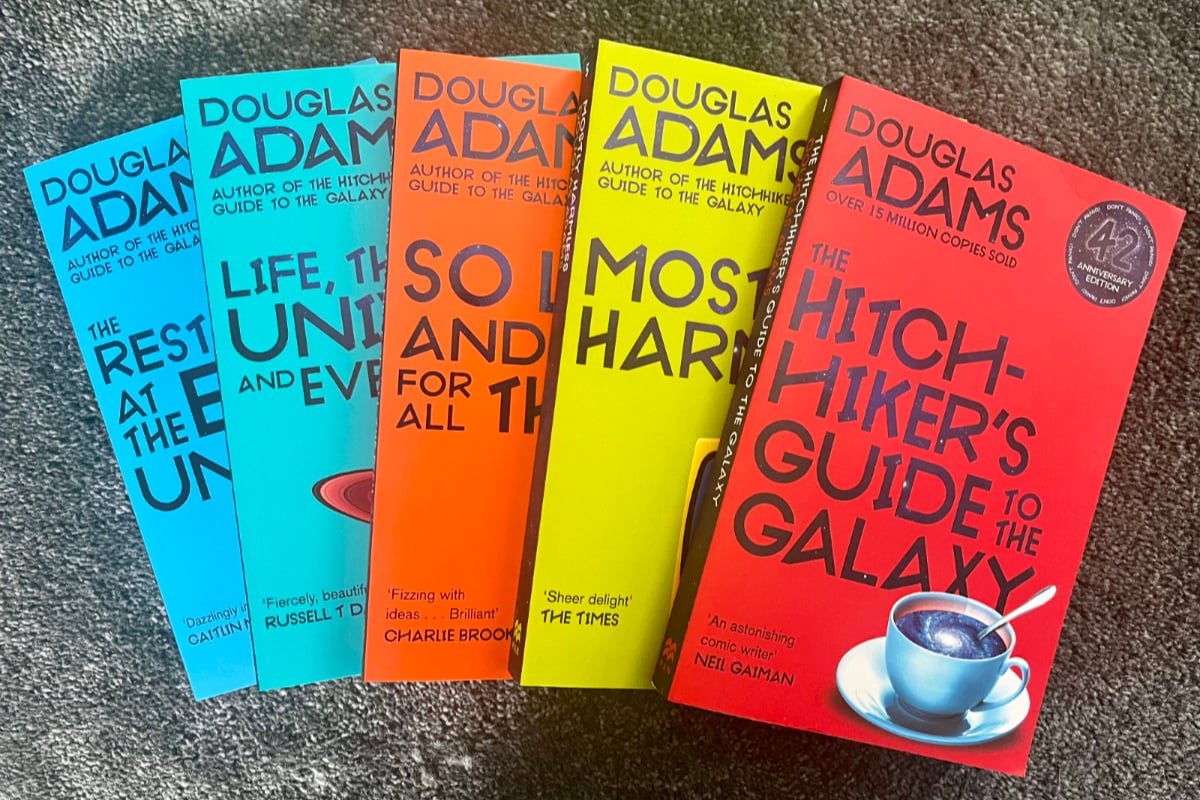
2. The Hitchhiker’s Guide to the Galaxy - by Douglas Adams
I couldn't leave out my all-time favourite author! Arthur Dent’s house gets demolished for a bypass; minutes later the Earth itself is demolished for… another bypass. From there the book spirals into a cosmic travel guide featuring depressed robots, useless philosophers, and the number 42.
Adams’ satire targets everything from bureaucracy to philosophy, all delivered with a tone of polite British bewilderment. It’s the only novel where the meaning of life is discovered and immediately becomes less useful than a towel.
3. Lucky Jim – by Kingsley Amis
A young academic named Jim Dixon desperately tries to survive the petty absurdities of university life without committing career suicide - or actual arson. Unfortunately, his attempts to appear respectable tend to end in catastrophic drunken speeches and facial expressions that should probably be illegal.
This is savage satire of academia long before “publish or perish” became a meme. If you’ve ever sat through a dull lecture and fantasised about setting the department on fire, Jim Dixon is your spiritual hero.
4. Cold Comfort Farm - by Stella Gibbons
Flora Poste, a sensible young woman armed with common sense and a notebook, moves to a rural farm filled with melodramatic relatives who behave like characters from a gloomy Victorian tragedy. She immediately decides to fix them all.
The novel gleefully mocks the “grim countryside misery” genre. Think of it as a polite but relentless British woman tidying up an entire gothic novel with the literary equivalent of a vacuum cleaner.
5. Paths Not Yet Taken – by Philip Rennett
Well, it would have been rude not to! The first book in the Path Finder series is a fast-paced political satire that explores power, identity, and the fragile machinery of modern government.
As the government (pick your own favourite) scrambles to manage perception and avoid embarrassment, the story reveals how precarious authority can be - and how ordinary lives can become entangled in extraordinary events.
6. The Rotters’ Club – by Jonathan Coe
Set in 1970s Birmingham (my era, if not my location), this novel mixes schoolboy awkwardness with biting satire about politics, class, and British institutions. The characters struggle through adolescence while the country struggles through strikes, economic chaos, and progressive rock.
It’s warm, nostalgic, and quietly hilarious. Coe manages to make teenage embarrassment feel like a national crisis - and British politics feel like a particularly awkward school assembly.
7. Wilt – by Tom Sharpe
Henry Wilt is a miserable lecturer trapped in a terrible marriage and an even worse technical college. One drunken evening he rehearses murdering his wife, using a blow-up doll - and the police soon become extremely interested.
Sharpe’s satire is gleefully outrageous, skewering education, marriage, and the police with equal enthusiasm. It’s the literary equivalent of a farce, where every door opens to reveal someone making things worse.
8. Decline and Fall – by Evelyn Waugh
Paul Pennyfeather is expelled from Oxford for indecent behaviour, despite technically being the victim. This minor inconvenience sends him tumbling through a parade of ridiculous British institutions including a chaotic boarding school and high society scandals.
Waugh’s deadpan style makes the absurd feel perfectly normal. It’s like reading a polite report on a society that has quietly lost its mind.
9. England, England – by Julian Barnes
A billionaire decides that the best way to celebrate England is to rebuild the entire country as a theme park on the Isle of Wight - complete with replicas of historic landmarks and hired actors playing famous figures.
Barnes’ satire is wickedly clever, asking whether a fake version of England might actually be more efficient than the real one. The answer, alarmingly but possibly unsurprisingly, might be yes.
10. The Queen and I – by Sue Townsend
In this brilliantly cheeky premise, a republican government abolishes the monarchy and relocates the entire royal family to a grim council estate. Suddenly the Queen is navigating social housing, difficult neighbours, and the mysteries of ordinary life.
Townsend’s humour comes from the contrast between royal dignity and everyday British chaos. Watching the Queen learn how to queue properly might be the most British satire imaginable.
To join the Path Finders mailing list, receive three prologues to Paths Not Yet Taken and get access to a quarterly newsletter, please complete the extremely short form at the foot of the home page.